
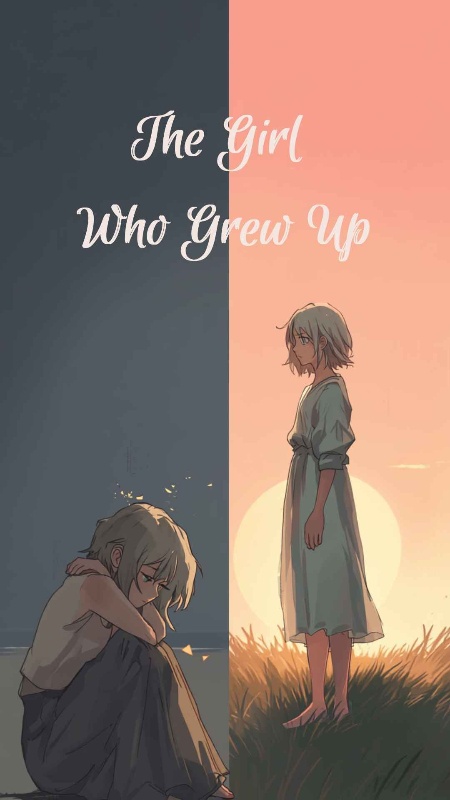
At seventeen, Lily Harper knew exactly how to disappear.
She knew how to sit at the back of a classroom and make herself small.
She knew how to eat lunch in the library so nobody would notice she had no one to sit with.
She knew how to laugh quietly when other people laughed, even when she hadn't heard the joke.
She knew how to say, “It's okay,” when it wasn't.
Most importantly, she knew how to keep her mouth shut.
Adults called her well-behaved.
Teachers called her sweet.
Relatives called her shy.
Nobody called her unhappy.
Lily didn't blame them.
She had become very good at hiding it.
She had learned early that speaking up made things complicated.
When her classmates laughed at her clothes, she said nothing.
When a teacher unfairly blamed her for something another student had done, she apologized.
When her friends changed plans without telling her, she smiled and said, “No worries.”
When someone interrupted her, she stopped talking.
When someone hurt her feelings, she told herself she was being too sensitive.
And when she went home at night and cried quietly into her pillow, she wiped her face before breakfast.
Her mother never understood why Lily spent so much time in her room.
“You're just going through a phase,” she would say.
Lily would nod.
Her father was kinder, but even he struggled to understand.
“You need to be more confident,” he told her once.
Lily smiled.
If only confidence were something you could simply decide to have.
She wished she could explain that she wasn't choosing silence.
Silence had chosen her.
Or perhaps she had chosen it so many times that it had become part of her.
At school, there was a girl named Chloe who seemed to own every room she entered.
Chloe laughed loudly.
She argued with teachers.
She walked through hallways as though everyone should move aside.
Lily secretly admired her.
She also secretly hated her.
Not because Chloe was cruel.
Because Chloe was free.
Lily wondered what it would feel like to say exactly what she thought without immediately wondering whether everyone hated her afterward.
She wondered what it would feel like to raise her hand in class without rehearsing the answer six times in her head.
She wondered what it would feel like to walk into a room and not immediately search for somewhere to hide.
She never told anyone about these thoughts.
Instead, she wrote them in a notebook.
The notebook became her safest friend.
At night, Lily wrote things she could never say aloud.
I am angry.
I am lonely.
I don't want to be invisible.
I wish someone would notice.
Then she would close the notebook and slide it beneath her mattress.
Nobody saw it.
Nobody knew.
Until the year everything changed.
Lily was eighteen when her world first broke.
It wasn't one dramatic event.
It was several small ones arriving too close together.
Her parents separated.
Her closest friend moved to another city.
She failed an important entrance exam she had spent months preparing for.
Then, three weeks later, she was rejected from the university she had dreamed about since she was fourteen.
The rejection email arrived on a rainy Thursday afternoon.
Lily read it three times.
Then she closed her laptop.
She sat on the edge of her bed.
For several minutes, she simply stared at the wall.
She had always believed that if she worked hard enough, stayed kind enough, and avoided making trouble, things would eventually work out.
That afternoon, she realized the world did not make promises like that.
Her mother was crying in the kitchen because of the separation.
Her father had moved into a small apartment across town.
Her best friend was three hundred miles away.
And the university she had imagined herself attending had just told her she wasn't good enough.
For the first time in her life, Lily didn't know what to do.
She didn't cry.
She didn't scream.
She simply stopped.
She stopped answering messages.
Stopped going out.
Stopped caring about her appearance.
Stopped writing.
Stopped eating properly.
Stopped sleeping properly.
Days blurred together.
Then weeks.
Her mother noticed eventually.
“You haven't been yourself.”
Lily looked down.
“I've just been tired.”
“You should talk to someone.”
“I'm fine.”
Her mother sighed.
“Lily.”
“I said I'm fine.”
It was the first time Lily had ever raised her voice at her mother.
The sound of it frightened them both.
Lily walked into her bedroom and shut the door.
Then she sat on the floor and cried until her chest hurt.
The next morning, she apologized.
She always apologized.
But this time something inside her had shifted.
Not healed.
Not strengthened.
Just shifted.
Because for the first time, she realized something.
She was exhausted from being the person who always made herself smaller.
She began seeing a counselor.
At first, she hated it.
The counselor, Dr. Evans, asked questions Lily didn't know how to answer.
“How are you feeling?”
“Fine.”
“That's not a feeling.”
Lily stared at her.
“I don't know.”
“That is an answer.”
Lily looked down.
“I don't know how I'm supposed to feel.”
“You're not supposed to feel anything in particular.”
That sentence stayed with her.
For years, Lily had believed there was a correct way to feel.
She thought sadness was weakness.
Anger was rude.
Fear was embarrassing.
Neediness was dangerous.
Speaking up was selfish.
Dr. Evans taught her something different.
Feelings weren't instructions.
They were information.
“You don't have to obey every feeling,” Dr. Evans told her. “But you should listen to what they're trying to tell you.”
Lily started listening.
She discovered she was angry.
Very angry.
At her parents.
At herself.
At people who had dismissed her.
At teachers who had talked over her.
At friends who had taken her kindness for granted.
At the version of herself who had spent years believing that silence would protect her.
She wrote everything down.
Then one day, Dr. Evans asked,
“What do you want?”
Lily laughed nervously.
“I don't know.”
“Try.”
“I want…”
She stopped.
Her eyes filled with tears.
“I want to stop being afraid.”
Dr. Evans smiled gently.
“That's a beginning.”
It was.
But becoming stronger wasn't dramatic.
There was no morning when Lily woke up fearless.
Instead, she began with tiny things.
She ordered food without changing her mind three times.
She told a friend when something hurt her feelings.
She stopped apologizing every time someone bumped into her.
She raised her hand in class.
Her voice shook.
Nobody laughed.
The next time, it shook less.
She started running in the mornings.
Not because she wanted to become thin.
Because she liked how running made her feel powerful.
She changed her clothes.
Not because she needed to look different.
Because she finally started choosing clothes she actually liked.
She began reading again.
She started writing again.
And slowly, she began meeting people.
One of them was Maya.
Maya was studying psychology at the local college and had a habit of asking uncomfortable questions.
On their third meeting, Maya said,
“You don't disagree with people.”
Lily smiled.
“I do.”
“No, you don't.”
“Yes, I do.”
“Name one thing you disagree with me about.”
Lily opened her mouth.
Nothing came out.
Maya grinned.
“Exactly.”
Lily laughed.
“Fine.”
She thought for a moment.
“I think pineapple belongs on pizza.”
Maya stared at her in horror.
“That isn't an opinion. That's a crime.”
Lily laughed so hard she nearly spilled her coffee.
It was a small moment.
But something about it mattered.
Lily was discovering that she could disagree with someone and still be liked.
That was revolutionary.
Over the next two years, she changed.
Not completely.
She still overthought things.
She still became nervous before important conversations.
She still sometimes replayed conversations at night and wondered whether she had said something stupid.
But now she recognized those thoughts.
And she no longer automatically believed them.
She went to university.
Not the one she had dreamed about.
A different one.
At first, she felt embarrassed.
Then she realized something.
Nobody cared.
Nobody was walking around thinking about the university Lily had failed to enter.
Everyone was busy worrying about their own lives.
That realization freed her.
She joined a student organization.
The first meeting terrified her.
She almost left.
Then she remembered something Dr. Evans had told her.
Confidence doesn't come before courage.
Sometimes courage has to come first.
So Lily stayed.
A month later, she volunteered to lead a project.
Six months later, she was running meetings.
A year later, she was standing in front of two hundred students giving a speech.
Her hands shook.
Her heart raced.
She almost forgot the first line.
Then she looked at the audience.
And began.
Her voice wasn't perfect.
It didn't need to be.
When she finished, the room applauded.
Lily stood there for a second.
She could hardly believe it.
The girl who had once hidden in the library during lunch was standing in front of hundreds of people.
She smiled.
And thought:
Look at me.
Not because she needed anyone else to be impressed.
Because she was impressed with herself.
But growing up didn't mean life stopped hurting.
That was something Lily had to learn the hard way.
At twenty-four, she fell in love.
His name was Daniel.
He was kind, funny, patient.
For the first time, Lily believed she had found someone who truly understood her.
Then they broke up.
Not because either of them was evil.
Not because someone cheated.
They simply wanted different lives.
Lily was devastated.
The old version of her would have blamed herself.
She would have begged him to stay.
She would have decided she wasn't lovable.
Instead, she cried.
She allowed herself to grieve.
She called Maya.
She went to therapy.
She ate ice cream directly from the container.
She spent one terrible Saturday watching old movies and refusing to answer the door.
And then, slowly, she moved forward.
That heartbreak taught her another lesson.
Being strong didn't mean never breaking.
It meant knowing how to rebuild.
Years passed.
Lily became a writer.
Then an editor.
Then eventually, she started her own small publishing company.
She hired people.
She negotiated contracts.
She fired someone once.
She hated doing it.
But she did it professionally and fairly.
She stood up in meetings.
She disagreed with people.
She said no.
She said yes.
She asked for more money when she believed she deserved it.
She admitted when she was wrong.
She apologized when she had actually done something wrong.
And she stopped apologizing simply for existing.
People began describing her differently.
“Confident.”
“Strong.”
“Ambitious.”
“Fearless.”
Lily always found the last one funny.
She wasn't fearless.
Not even close.
She still got scared.
She still doubted herself.
She still had nights when old insecurities whispered that she wasn't enough.
The difference was that she no longer allowed fear to make every decision.
At twenty-nine, Lily returned to her old school to speak to graduating students.
She almost laughed when she received the invitation.
She stood backstage before the speech, looking through a narrow opening in the curtain.
The classroom had been renovated.
The chairs were different.
The walls were painted.
But the smell was the same.
For a moment, she was seventeen again.
Small.
Quiet.
Invisible.
She remembered the library.
The back row.
The notebook beneath her mattress.
The girl who thought staying silent would protect her forever.
Then someone announced her name.
Lily walked onto the stage.
The applause was polite at first.
She looked at the students.
Some were paying attention.
Some were whispering.
One boy was clearly trying not to fall asleep.
Lily smiled.
She understood.
Then she began.
“I used to think confidence meant never being afraid.”
The room became quieter.
“I was wrong.”
She looked toward the back row.
“I was a very shy girl. I didn't speak up. I didn't know how to say no. I thought being liked was more important than being honest.”
She paused.
“Then life broke me.”
Nobody moved.
“It broke me in ways I didn't expect. And for a while, I thought that meant I was weak.”
Her voice softened.
“But eventually I learned something.”
She looked at the students.
“Breaking is not the opposite of strength.”
“It can be the beginning of it.”
Silence.
Then Lily smiled.
“You don't have to become the loudest person in the room. You don't have to become someone else. You don't even have to stop being shy.”
A few students smiled.
“You just have to stop abandoning yourself to make other people comfortable.”
That sentence stayed in the room.
Lily could feel it.
Because she had spent years abandoning herself.
Saying yes when she meant no.
Laughing when she wanted to cry.
Staying silent when she needed to speak.
Making herself smaller so other people could feel bigger.
She didn't do that anymore.
After the speech, a girl approached her.
She couldn't have been older than eighteen.
She stood nervously at the edge of the stage.
“Can I talk to you?”
“Of course.”
The girl hesitated.
“I think I'm like you.”
Lily smiled.
“You don't have to be like me.”
The girl looked confused.
“I mean… I'm quiet.”
“I understand.”
“And I feel like everyone else knows how to live except me.”
Lily felt something tighten in her chest.
She remembered being seventeen.
She remembered that exact feeling.
So she sat down.
The girl sat beside her.
For several minutes, Lily didn't give advice.
She simply listened.
When the girl finished, Lily said,
“You don't have to figure out your whole life right now.”
“I don't?”
“No.”
Lily smiled.
“I certainly didn't.”
The girl laughed.
Then Lily said something she wished someone had told her years ago.
“You are allowed to grow slowly.”
The girl nodded.
“And you are allowed to become someone you haven't met yet.”
Outside, the afternoon sun was beginning to fade.
Lily walked through the school hallway alone.
She passed the library.
She stopped.
For a moment, she considered going inside.
Instead, she smiled and kept walking.
She no longer needed to hide there.
She had nothing against the library.
It had once been a safe place.
But she didn't need hiding places anymore.
She had learned how to make a home inside herself.
That night, Lily went home and opened an old box she hadn't touched in years.
Inside was the notebook.
The pages had yellowed.
She opened it.
There were the old sentences.
I am angry.
I am lonely.
I don't want to be invisible.
I wish someone would notice.
Lily read them slowly.
Then she found one she had forgotten.
I want to stop being afraid.
She smiled.
“I didn't,” she whispered.
She closed the notebook.
“I just stopped letting fear run my life.”
She placed the notebook back inside the box.
Then she looked around her apartment.
Her books.
Her plants.
Her photographs.
Her work.
Her life.
None of it had happened exactly the way seventeen-year-old Lily had imagined.
It was better in some ways.
Harder in others.
Messier.
More complicated.
More real.
She had lost people.
She had failed.
She had been rejected.
She had loved and been hurt.
She had made mistakes.
She had started over.
More than once.
And somehow, she had become herself.
Not the loudest woman in the room.
Not the bravest.
Not the most successful.
Just someone who finally understood that her voice mattered.
Years later, when people asked Lily when she had become confident, she could never give them one date.
There had been no single transformation.
There had been hundreds of tiny moments.
The first time she said no.
The first time she admitted she was hurting.
The first time she asked for help.
The first time she walked away from someone who didn't respect her.
The first time she spoke even though her voice shook.
The first time she failed and didn't call herself worthless.
The first time she looked into a mirror and didn't immediately search for something to criticize.
The first time she realized she liked herself.
Those moments had built her.
Brick by brick.
Day by day.
She hadn't become unstoppable because the world stopped hurting her.
She became unstoppable because the world could hurt her without deciding who she was.
And that was the difference.
The shy girl hadn't disappeared.
Lily hadn't killed that version of herself.
She had forgiven her.
She understood now why that girl had stayed quiet.
She had been scared.
She had been trying to survive.
And she had done the best she could with what she knew.
Lily was proud of her.
She was proud of the girl who had hidden.
Because that girl had survived long enough to become the woman standing here now.
The woman who spoke.
The woman who chose.
The woman who loved.
The woman who walked away.
The woman who returned.
The woman who could still be afraid and move forward anyway.
She looked out her window.
The city was glowing beneath the night sky.
Somewhere, another seventeen-year-old girl was probably sitting alone in a bedroom, wondering whether she would always feel small.
Lily hoped that girl would eventually learn what she had learned.
That growing up wasn't becoming fearless.
It wasn't becoming perfect.
It wasn't becoming someone the world couldn't hurt.
It was learning that you can be hurt and still continue.
You can fall and still stand.
You can lose people and still love.
You can fail and still try again.
You can be quiet and still have a powerful voice.
You can be afraid and still be brave.
And sometimes the strongest person in the room is not the one shouting the loudest.
Sometimes it is the person whose voice shakes as they finally say,
“No.”
Or,
“This hurts.”
Or,
“I deserve better.”
Or simply,
“This is who I am.”
Lily smiled.
She turned off the light.
And for the first time in her life, she didn't wonder whether the world would accept her.
She knew something much more important.
She accepted herself.
And that was enough.