
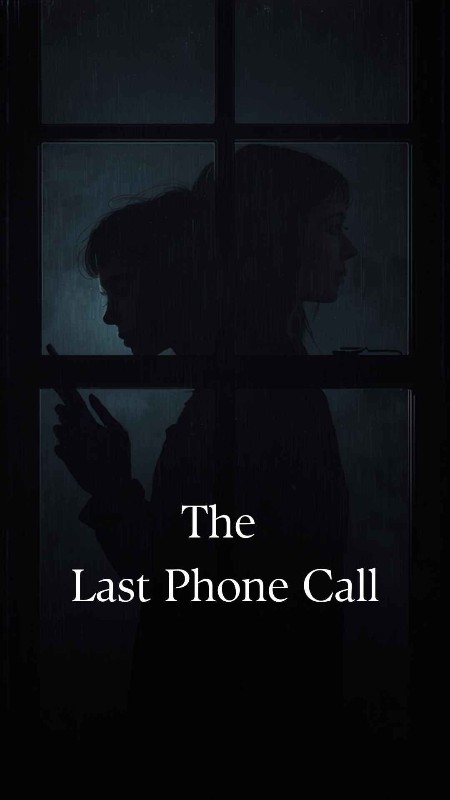
At 11:47 on a Thursday night, Nora's phone rang.
She almost didn't answer.
She was sitting on the edge of her bed with a half-finished cup of tea beside her, staring at an email she had been trying to write for nearly an hour. Her apartment was quiet except for the rain tapping against the bedroom window.
She looked at the screen.
Lena.
Nora smiled.
They hadn't spoken in four days.
That wasn't unusual anymore.
Life had become busy in ways neither of them had expected. Work. Bills. Families. Appointments. Exhaustion. The thousand small obligations that slowly filled a person's life until calling someone you loved could somehow become something you kept postponing.
Nora answered.
“Hey.”
There was silence.
Not the comfortable silence they had shared for years.
Something else.
“Nora?”
Nora sat up straight.
Lena's voice sounded weak.
“Yeah.”
“Are you awake?”
Nora looked at the clock.
“It's almost midnight.”
“I know.”
“You sound awful.”
Lena laughed softly.
“I've sounded awful for months.”
“No. I mean—”
“I know what you mean.”
Nora's smile disappeared.
“What's wrong?”
Another silence.
Then Lena said, “I wanted to hear your voice.”
Nora's stomach tightened.
Something in the way she said it made the room suddenly feel colder.
“Lena, what's happened?”
“I've been in the hospital.”
Nora stood.
“What?”
“I didn't tell you.”
“Why didn't you tell me?”
“I didn't want you to worry.”
“You've got to be kidding me.”
“I know.”
“Which hospital?”
“Nora—”
“Which hospital?”
Lena gave her the name.
Nora grabbed her coat.
“I'm coming.”
“No.”
“What?”
“Don't.”
“Lena, I'm coming.”
“Please.”
Nora stopped.
She could hear Lena breathing.
Slowly.
Carefully.
“Why?”
Lena didn't answer immediately.
Then she whispered,
“Because I'm dying.”
Nora closed her eyes.
The world didn't stop.
That was the strange part.
The rain kept falling.
A car passed outside.
Somewhere in the building, a pipe rattled.
Her refrigerator hummed.
Everything continued exactly as it had been.
Only Nora didn't.
She stood in the middle of her bedroom, holding the phone against her ear, unable to make sense of the sentence.
“No.”
“I know.”
“No.”
“Nora—”
“No. You're thirty-four.”
“I know.”
“You can't be dying.”
Lena laughed.
It was the smallest laugh.
“I've always appreciated your ability to focus on the obvious.”
Nora began crying.
“Don't joke.”
“I wasn't.”
“Then tell me you're wrong.”
Silence.
“Lena.”
“I wish I could.”
Nora sat back down.
Her knees had stopped working.
“When?”
“I don't know.”
“Tonight?”
“Maybe.”
“Tomorrow?”
“Maybe.”
“Next week?”
“I don't know.”
Nora pressed her hand against her mouth.
She wanted to scream.
Instead she whispered,
“Why didn't you tell me?”
“I was scared.”
“You could have called.”
“I know.”
“I would have come.”
“I know.”
“You should have let me come.”
“I know.”
Nora cried harder.
Lena's voice softened.
“I knew you'd say that.”
“Because you know me.”
“Yeah.”
“I hate you.”
“I know.”
“I don't hate you.”
“I know that too.”
For a moment, neither spoke.
Then Lena said,
“Do you remember the lake?”
Nora laughed through her tears.
“Which one?”
“The one we almost drowned in.”
“We did not almost drown.”
“We absolutely did.”
“We were sitting in three feet of water.”
“You panicked.”
“You pushed me.”
“You said you could swim.”
“I can swim.”
“You swam directly into a tree.”
Nora laughed.
It surprised her.
She hadn't expected to laugh tonight.
Lena laughed too.
For a few seconds, they were twenty-one again.
Two girls with cheap backpacks, sunburned shoulders, and absolutely no idea what they were doing with their lives.
They had met at nineteen.
Nora had been late for a university lecture.
Lena had been sitting in the only empty seat.
Nora whispered, “Is this taken?”
Lena looked at the chair.
Then at Nora.
Then back at the chair.
“No.”
Nora sat.
Thirty seconds later, Lena whispered,
“You're going to fail.”
Nora frowned.
“What?”
“The professor hates people who arrive late.”
“You don't know that.”
“I've been here three weeks.”
“And?”
“He hates late people.”
“How do you know?”
“He told me.”
Nora stared at her.
“You're serious?”
“Completely.”
Nora looked toward the professor.
He was staring directly at her.
She sank lower in her chair.
Lena covered her mouth to hide her laughter.
That was how it began.
Not dramatically.
Not perfectly.
Just two strangers trying not to get caught laughing in a lecture.
They became friends slowly.
Then quickly.
They studied together.
Skipped classes together.
Worked terrible part-time jobs.
Shared apartments.
Shared secrets.
Shared heartbreak.
When Nora's first boyfriend cheated on her, Lena spent the night eating ice cream with her.
When Lena's mother got sick, Nora drove three hours to be with her.
When Nora got married, Lena stood beside her.
When Lena called off her engagement, Nora sat on her kitchen floor until sunrise.
They had been there for each other through almost everything.
Almost.
Because when Lena got sick, she didn't tell Nora.
That was the part Nora couldn't understand.
“I'm sorry,” Lena said.
Nora wiped her face.
“Don't.”
“I am.”
“Don't apologize.”
“I should have told you.”
“Yes.”
“I know.”
“I would have helped.”
“I know.”
“Then why?”
Lena was quiet.
Finally she said,
“Because I didn't want the last part of my life to become everybody's emergency.”
Nora didn't answer.
“I got tired of being the person people looked at differently.”
“Who looked at you differently?”
“Everyone.”
“Not me.”
“I know.”
“You don't know that.”
“I do.”
“Then why didn't you tell me?”
Lena took a breath.
“Because I knew you'd look at me like I was leaving.”
Nora's chest tightened.
“I am leaving.”
“I know.”
“And I don't want you to.”
“I know.”
Another silence.
Then Lena whispered,
“I'm sorry.”
Nora closed her eyes.
“I'm scared.”
“I know.”
“No. I'm really scared.”
“So am I.”
It was the first time Lena admitted it.
Nora had imagined dying people as calm.
Wise.
Accepting.
She had never imagined someone lying in a hospital bed, terrified of the same thing everyone else was terrified of.
“Are you alone?” Nora asked.
“Right now.”
“Where's your family?”
“My brother is downstairs.”
“Put him on.”
“No.”
“Lena.”
“Please.”
Nora stopped arguing.
She understood.
This wasn't a hospital call.
It was a goodbye.
And neither of them was ready to say the word.
“Do you remember our first apartment?” Lena asked.
Nora laughed softly.
“The one with the broken heating?”
“And the terrible landlord.”
“And the bathroom door that wouldn't close.”
“And your obsession with buying plants.”
“I kept them alive.”
“You killed six.”
“Five.”
“Six.”
“One was already dying.”
“You bought it dying.”
“It was discounted.”
Lena laughed.
Nora listened to the sound.
She tried to memorize it.
That frightened her.
She had never before understood that you could listen to someone's laugh and already miss it.
“Do you remember the blue mug?” Lena asked.
“The ugly one?”
“You loved that mug.”
“It was comfortable.”
“Mugs aren't comfortable.”
“That one was.”
“You still have it?”
Nora looked toward the kitchen.
“Yeah.”
“Really?”
“Yeah.”
“Good.”
“Why?”
“I don't know.”
Nora smiled through her tears.
“I'm keeping it.”
“You'd better.”
“I will.”
Lena was quiet.
Then she said,
“Do you remember when we stopped talking?”
Nora's smile disappeared.
“Which time?”
“The big one.”
Nora knew immediately.
“Yeah.”
They had fought when they were twenty-seven.
Nora had been getting married.
Lena had told her she was making a mistake.
Nora had been furious.
They didn't speak for almost a year.
Later, Lena apologized.
Nora apologized too.
But neither of them ever forgot how easy it had been to lose each other.
“I thought we'd never speak again,” Lena said.
“So did I.”
“I was stubborn.”
“You were.”
“You were worse.”
“I was.”
Lena laughed.
“I missed you.”
“I missed you too.”
“Why didn't you call?”
“I thought you didn't want me to.”
“I was waiting for you.”
“I was waiting for you.”
They both laughed sadly.
“Two idiots,” Nora said.
“Always.”
At 12:36, Nora realized she had stopped crying.
She was simply listening.
Lena's breathing was becoming slower.
“Are you tired?”
“A little.”
“You should sleep.”
“I don't want to.”
“Why?”
“I don't want to miss anything.”
Nora's eyes filled again.
“There isn't anything happening.”
“There is.”
“What?”
“I'm talking to you.”
Nora put her head against the wall.
“You know what I hate?”
“What?”
“That we wasted so much time.”
Lena was quiet.
“Everyone does.”
“We thought we had so much.”
“Everyone thinks that.”
“I would have called more.”
“So would I.”
“I would have come to the hospital.”
“I know.”
“I would have sat there.”
“I know.”
“I wouldn't even have talked.”
“I know.”
Nora swallowed.
“I would've just sat there.”
Lena whispered,
“That would've been enough.”
There were things Nora wanted to say.
A thousand things.
But when the moment came, she couldn't find the words.
So she started with the smallest ones.
“Thank you.”
“For what?”
“For everything.”
“That's very vague.”
Nora laughed.
“For staying.”
Lena was silent.
“For all those years,” Nora continued. “For knowing when I was lying. For making me laugh when I didn't want to. For telling me when I was being stupid.”
“You were frequently stupid.”
“See?”
Lena laughed.
Nora continued.
“Thank you for believing in me.”
“I always did.”
“Even when I didn't?”
“Especially then.”
Nora closed her eyes.
“I love you.”
There.
She had finally said it.
Not romantic love.
Something older.
Something quieter.
The kind of love built from years.
From ordinary mornings.
From shared food.
From arguments.
From knowing someone had seen the worst version of you and stayed anyway.
Lena's voice trembled.
“I love you too.”
Nora cried.
“I should have said it more.”
“You said it enough.”
“No.”
“You did.”
“No, I didn't.”
Lena took a breath.
“Then say it now.”
Nora smiled through her tears.
“I love you.”
“I know.”
“I love you.”
“I know.”
“I love you.”
Lena laughed softly.
“Okay. Now you're showing off.”
At 1:04, Lena said,
“Nora?”
“Yeah?”
“If I die tonight…”
“Don't.”
“If I do…”
Nora swallowed.
“Okay.”
“Don't remember me sick.”
Nora closed her eyes.
“I won't.”
“Remember the lake.”
“I will.”
“Remember the apartment.”
“I will.”
“Remember the stupid blue mug.”
“I will.”
“Remember that time we danced in the supermarket.”
Nora laughed.
“You started that.”
“You joined.”
“You were drunk.”
“You were too.”
“I had one drink.”
“Exactly.”
They laughed.
Then Lena said,
“Remember me laughing.”
Nora whispered,
“I will.”
“Promise?”
“I promise.”
Lena was quiet.
Then:
“And live.”
Nora's eyes opened.
“What?”
“Live.”
“Lena—”
“Don't turn me into the reason you stop.”
Nora couldn't speak.
“You've always been scared of losing people,” Lena said. “I know.”
“I don't know how to do this.”
“You don't have to know.”
“What if I can't?”
“You can.”
“How?”
“Badly.”
Nora laughed through her tears.
“That's your advice?”
“It's good advice.”
“It sounds terrible.”
“It means you don't have to be okay.”
Nora wiped her face.
“You're still giving advice.”
“Someone has to.”
At 1:21, Lena's voice became faint.
“Nora?”
“I'm here.”
“Are you still there?”
“I'm here.”
“Good.”
A long pause.
“I wish we'd taken that trip.”
Nora smiled.
“To Italy?”
“Yeah.”
“We'll still go.”
Lena didn't answer.
Nora realized what she had said.
She closed her eyes.
“I mean…”
“I know.”
Another silence.
Then Lena whispered,
“Take pictures.”
“I will.”
“Eat too much pasta.”
“I will.”
“Get lost.”
“I'll try.”
“And don't bring anyone who complains.”
Nora smiled.
“I'll bring someone who complains.”
“Good.”
“Because otherwise I'd miss you.”
Lena didn't answer.
Nora waited.
“Lena?”
Nothing.
“Lena?”
She could hear breathing.
Slow.
Uneven.
Then:
“I'm tired.”
“I know.”
“Can I sleep?”
Nora's throat closed.
“Yes.”
“Will you stay?”
“Of course.”
“Until I fall asleep?”
“Yes.”
“Okay.”
Nora lay down on her bed.
She held the phone against her ear.
“I'm here.”
Lena breathed softly.
Neither spoke.
Nora listened.
She listened to the rain.
She listened to Lena breathing.
She listened to the silence between them.
At 1:37, Lena whispered,
“Nora?”
“Yeah?”
“Thank you.”
Nora's eyes filled.
“For what?”
“For answering.”
Nora pressed the phone harder against her ear.
“I'll always answer.”
There was a pause.
Then Lena whispered,
“I know.”
It was the last thing she said.
Nora stayed on the phone.
Five minutes.
Ten.
Twenty.
She didn't know exactly when Lena's breathing stopped.
She only knew that eventually there was silence.
A different kind.
A permanent one.
Nora whispered,
“Lena?”
Nothing.
She waited.
“Lena?”
Nothing.
She stayed there anyway.
Because some part of her still believed that if she didn't hang up, the ending hadn't happened yet.
At 2:14, Lena's brother called Nora from another phone.
He didn't need to say anything.
Nora understood.
She lowered her phone.
For a long time, she stared at it.
Then she placed it carefully on the bed beside her.
And broke.
The funeral was three days later.
Nora stood beside the coffin and couldn't look at Lena's face.
Instead, she looked at her hands.
She remembered those hands holding a blue mug.
Writing notes.
Tying shoelaces.
Grabbing Nora's wrist when she tried to cross the road without looking.
Hands that had existed for thirty-four years.
Now still.
That was the word nobody warned her about.
Still.
People died and became still.
Their voices disappeared from rooms.
Their shoes remained by doors.
Their passwords remained written in notebooks.
Their names stayed in contact lists even though calling them became impossible.
Their birthdays arrived.
Their favorite songs played in supermarkets.
Their jokes appeared in your head at completely inappropriate times.
Life didn't erase them.
It simply removed their ability to participate in it.
And somehow, that was harder.
For months, Nora couldn't listen to rain.
She couldn't drink tea from the blue mug.
She couldn't walk past the bookstore where they used to meet.
She avoided the lake.
She ignored Lena's photographs.
She told herself she was protecting herself.
But grief doesn't disappear because you refuse to look at it.
One evening, almost a year later, Nora opened the drawer beside her bed.
Her phone was inside.
She scrolled through old messages.
Most were meaningless.
Buy milk.
I'm running late.
Did you see that movie?
Your plant is dying.
My plant is fine.
It is absolutely not fine.
She laughed.
Then she found one message she hadn't noticed before.
It was from Lena.
Sent six months before the last call.
If I ever disappear, don't make me bigger than I was.
Nora stared at it.
There was another message beneath it.
I was just me. I was your friend. I was annoying. I was funny sometimes. I was wrong a lot. Remember all of it.
Nora cried.
But this time, she didn't close the phone.
She read every message.
Every stupid joke.
Every argument.
Every photograph.
Every ordinary moment.
And she understood.
Lena hadn't wanted to become a tragedy.
She wanted to remain a person.
Her friend.
Not the woman who died.
The woman who lived.
Two years after the last phone call, Nora finally went to Italy.
She stood in a tiny restaurant in Rome with a glass of water in front of her.
She looked at the empty chair across the table.
“You'd complain about this place,” she said.
The waiter looked confused.
Nora laughed.
“Sorry.”
She ordered too much pasta.
She got lost.
She took terrible photographs.
She bought a ridiculous blue mug from a little shop because she saw it in the window and immediately thought of Lena.
That night, she sat on the balcony of her hotel.
The city hummed below.
Nora looked at the mug.
“I did it,” she whispered.
The words felt strange.
But good.
She had lived.
Not perfectly.
Not without grief.
Not without bad days.
She had simply kept going.
And somewhere between losing Lena and learning how to live without her, Nora had finally understood what that last phone call had really been.
It hadn't been a goodbye.
Not entirely.
It had been a hand reaching across the distance between life and death, asking Nora to remember.
Not the hospital.
Not the machines.
Not the final breath.
The lake.
The broken apartment.
The supermarket dancing.
The terrible coffee.
The blue mug.
The laughter.
The friendship.
The life.
Nora closed her eyes.
For just a moment, she could almost hear Lena laughing.
“You're doing it wrong,” the voice seemed to say.
Nora smiled.
“I'm doing it my way.”
The city continued below her.
Cars moved.
People talked.
Music drifted from somewhere down the street.
Life continued.
And for the first time, Nora didn't resent it.
She lifted the blue mug toward the empty chair.
“To us,” she whispered.
Then she drank.
And kept living.