
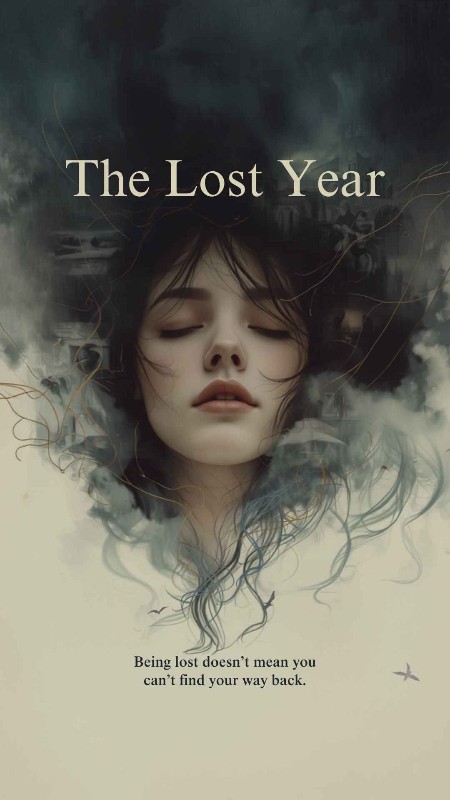
For almost a year, Lena Harper disappeared without ever leaving her bedroom.
That was the strange thing about it. She still lived in the same house. She still answered messages sometimes. She still went downstairs when her mother called her for dinner. She still showered, though not every day. She still attended university for a while, still smiled when someone asked how she was, still said “I'm fine” with such practiced ease that eventually even she almost believed it.
But somewhere between one ordinary Tuesday and another, Lena stopped feeling like a person who was living her life.
She became someone watching it happen.
At twenty-one, she had once been the kind of person who filled notebooks with plans. She wanted to travel after university. She wanted to write a novel. She wanted an apartment with huge windows and plants she would probably forget to water. She had a list on her phone called Things I’ll Do Before I’m Thirty, and it contained forty-three things, including learning Italian, seeing the northern lights, adopting a dog, running a half marathon, and kissing someone in the rain.
She used to laugh at the list.
Then she stopped opening it.
It began quietly.
There was no dramatic morning when Lena woke up and suddenly became depressed. There was no single event she could point toward and say, There. That was the moment everything went wrong.
Instead, things became harder in ways that seemed too small to deserve attention.
Getting out of bed became difficult.
Answering messages became exhausting.
Going to lectures felt like climbing a hill with weights tied around her ankles.
Food lost its taste.
Music became noise.
Her favorite television shows became things she couldn't concentrate on for more than ten minutes.
Her friends noticed she was quieter.
Lena told them she was tired.
They believed her.
Everyone was tired.
That was the problem.
There were explanations for everything.
You're studying too much.
You're probably not sleeping enough.
It's just stress.
Everyone feels like that sometimes.
Lena repeated those explanations until they became another kind of silence.
One evening, her best friend, Maya, called.
Lena watched the phone vibrate beside her pillow.
Maya.
The name remained on the screen.
Lena knew she should answer.
She also knew that if she answered, Maya would ask how she was.
And Lena didn't know how to explain that she had spent the entire afternoon staring at the ceiling because standing up felt impossible.
So she let it ring.
The screen went dark.
A minute later, a message appeared.
You okay?
Lena stared at it.
She typed:
Yeah.
Deleted it.
Typed:
Just tired.
Deleted that too.
Finally, she sent:
I'm fine. Sorry, been busy.
It was a lie.
But it was an easy lie.
And easy things were becoming the only things Lena could manage.
By October, she had stopped going to university regularly.
She told her mother she was studying at home.
Sometimes she actually opened her laptop.
Most days, she didn't.
She would sit at her desk for hours with a blank document open in front of her, the cursor blinking patiently in the white space.
The cursor became strangely irritating.
It kept moving.
It kept waiting.
It seemed to know that she had nothing to say.
One afternoon, Lena finally closed the laptop and whispered, “I don't know what's wrong with me.”
Her voice sounded unfamiliar.
She looked at herself in the mirror.
Her hair was messy. Her eyes looked tired. Her face looked thinner than it had a few months earlier.
She searched her reflection for the girl she remembered.
The girl who laughed too loudly.
The girl who made plans she couldn't afford.
The girl who once danced in the kitchen while waiting for pasta to boil.
The girl who believed bad days ended.
Lena looked at herself for a long time.
Then she turned away.
Maybe I'm just lazy.
The thought came easily.
It became a habit.
She called herself lazy when she couldn't get out of bed.
Selfish when she ignored messages.
Weak when she cried.
Unproductive when she slept.
Broken when she couldn't explain why.
The cruelest voice in her life was her own.
And because it sounded like her, she believed it.
Her mother noticed first.
Not the sadness.
The missing pieces.
Lena stopped eating breakfast.
Stopped asking about her mother's day.
Stopped arguing about small things.
Stopped complaining.
That frightened her mother more than anger ever could.
One Sunday morning, her mother knocked on Lena's bedroom door.
“Come in.”
She opened it.
Lena was sitting on the floor with her back against the bed.
“Are you coming downstairs?”
“In a minute.”
“You've said that for twenty minutes.”
Lena managed a small smile.
“Sorry.”
Her mother stood in the doorway.
She looked at her daughter carefully.
“Lena.”
“What?”
“You don't seem like yourself.”
Lena looked down.
“I'm just tired.”
“I know.”
There was something in her mother's voice that made Lena look up.
“I know you're tired,” she said softly. “But I don't think this is just tired.”
Lena felt something tighten in her chest.
“I'm fine.”
Her mother didn't argue.
She simply said, “Okay.”
Then she closed the door.
For some reason, that made Lena cry.
Not loudly.
Not dramatically.
She simply sat on the floor and cried with the strange embarrassment of someone who had forgotten how.
Winter arrived.
Lena's world became smaller.
Her bedroom.
The kitchen.
The supermarket at the end of the street.
The university library, occasionally.
That was almost everything.
Friends stopped inviting her to things because she kept saying no.
At first they asked twice.
Then once.
Eventually, they stopped.
It wasn't cruelty.
People had lives.
Lena understood that.
But understanding something didn't make it hurt less.
One Friday night, she opened Instagram and saw photographs of her friends at a restaurant.
Maya was laughing.
Someone had taken a picture of her with her head tilted back, eyes closed, completely happy.
Lena stared at the photograph.
Then she closed the app.
She opened it again.
Closed it.
Opened it again.
Eventually she threw her phone onto the bed.
“They're better without me,” she whispered.
It sounded ridiculous when she said it aloud.
But depression didn't care whether thoughts sounded ridiculous.
It only cared whether they hurt.
And that thought hurt.
So Lena believed it.
The worst part of depression, Lena would later realize, wasn't sadness.
Sadness was familiar.
The worst part was indifference.
There were mornings when she wasn't even sad.
She simply didn't care.
Her alarm rang.
She turned it off.
Sunlight came through the curtains.
She closed them.
Her mother called her name.
She said she'd come down later.
Her professor emailed asking whether she intended to continue the semester.
She didn't reply.
Her friends sent messages.
She read them without answering.
Her dreams sat quietly in the corner of her mind, gathering dust.
She wasn't choosing to abandon them.
She simply couldn't feel their importance anymore.
That frightened her.
One evening, Lena found the notebook containing her old list.
She hadn't opened it in months.
She sat on the floor and read it.
Learn Italian.
She smiled faintly.
See the northern lights.
She turned the page.
Adopt a dog.
Her eyes filled with tears.
At the bottom, written in bright blue ink, was:
Become someone I'm proud of.
Lena stared at that sentence.
Then she shut the notebook.
“I don't even know who I am anymore.”
The following Monday, her mother drove her to a doctor.
Lena didn't want to go.
She spent the entire car ride staring out the window.
“I don't need this,” she said.
Her mother kept her eyes on the road.
“Maybe.”
Lena frowned.
Her mother continued driving.
“Maybe you don't. But maybe you do.”
Lena looked at her.
“You think I'm crazy?”
“No.”
“Then what?”
“I think you're hurting.”
Lena looked away.
Nobody had called it that before.
Not lazy.
Not weak.
Not dramatic.
Hurting.
The word stayed with her.
At the appointment, Lena struggled to explain what was happening.
She cried.
Then apologized for crying.
The doctor told her she didn't need to apologize.
There were questions.
How long had she felt this way?
How was she sleeping?
Was she eating?
Could she concentrate?
Had she stopped enjoying things?
Was she struggling to function?
Lena answered honestly.
For the first time in months.
Eventually, the doctor explained that what Lena was experiencing was consistent with depression and recommended professional treatment, including therapy and discussing treatment options with a mental-health professional.
Lena sat quietly.
The diagnosis didn't magically make her feel better.
But it gave the darkness a name.
And somehow, having a name made it feel slightly less like a personal failure.
Her therapist's name was Dr. Evans.
The first session lasted fifty minutes.
Lena spent forty-seven of them saying she didn't know what to say.
Dr. Evans didn't seem bothered.
“You don't have to perform here,” she said.
Lena frowned.
“Perform?”
“Pretend you're okay.”
Lena looked at the carpet.
“I do that a lot.”
“I know.”
“You don't know me.”
“No,” Dr. Evans said. “Not yet.”
That made Lena smile.
It was tiny.
But it was real.
They talked about sleep.
Food.
University.
Friends.
Family.
Expectations.
Fear.
Guilt.
The strange pressure Lena felt to become successful quickly.
The fear that everyone else was moving forward while she was standing still.
One afternoon, Lena said, “I feel like I've wasted my life.”
Dr. Evans looked at her.
“You're twenty-one.”
“I know.”
“You talk about yourself as if you're seventy.”
Lena laughed.
It surprised both of them.
Dr. Evans smiled.
“Depression can make a difficult season feel like a permanent identity.”
Lena thought about that sentence all evening.
A difficult season.
Not a permanent identity.
It didn't feel true yet.
But it felt possible.
And possibility was something Lena hadn't felt in a long time.
Recovery wasn't beautiful.
Lena wished someone had told her that.
There were no dramatic mornings where sunlight entered her room and she suddenly felt alive again.
Instead, there were tiny victories nobody else noticed.
She showered.
She ate breakfast.
She opened the curtains.
She replied to one message.
She walked around the block.
She attended one lecture.
She came home exhausted.
The next day she couldn't do it.
That was the frustrating part.
Progress wasn't a staircase.
It was more like walking through fog.
Sometimes she moved forward.
Sometimes she stood still.
Sometimes she walked backward.
But eventually, she learned that moving backward for a day didn't mean she had returned to the beginning.
One rainy morning, Lena couldn't get out of bed.
She felt guilty.
Then she remembered something Dr. Evans had told her.
“A bad day isn't proof that you're failing. It's a bad day.”
So Lena stayed in bed for another hour.
Then she got up.
That was it.
No triumph.
No music.
No miracle.
She simply got up.
And somehow, that mattered.
Maya came to visit in March.
Lena almost canceled.
She typed:
I'm not feeling great today.
Then deleted it.
Typed:
Can we do another day?
Deleted that too.
Finally, she sent:
Come over.
Maya arrived carrying two coffees and a paper bag.
“I brought pastries.”
Lena stared at the bag.
“You know I haven't been eating much.”
“I know.”
“Then why pastries?”
“Because I didn't know what else to bring.”
Lena laughed.
Maya shrugged.
“I considered flowers, but then I remembered you'd kill them.”
“I don't kill plants.”
“You killed a cactus.”
“That cactus was dramatic.”
Maya smiled.
They sat on Lena's bedroom floor.
For a while, neither spoke.
Then Maya said, “I missed you.”
Lena's eyes filled with tears.
“I know.”
“No, you don't.”
Lena looked at her.
“I really missed you.”
“I missed you too.”
“Then why didn't you call?”
Lena looked down.
“I didn't know how.”
Maya nodded.
“I didn't know how to reach you.”
“I thought you were angry.”
“I was.”
Lena looked up.
Maya sighed.
“I was angry because I missed you. And I felt guilty for being angry because I knew something was wrong.”
Lena swallowed.
“I thought everyone was better without me.”
Maya's expression changed.
“Lena.”
“What?”
“That's not true.”
“I know it sounds stupid.”
“It doesn't sound stupid.”
Maya reached across the floor and took her hand.
“You were sick. You weren't a bad friend.”
Lena looked at their hands.
That distinction felt enormous.
Being unwell was not the same thing as being worthless.
She hadn't understood that before.
By spring, Lena began returning to university.
Not full-time.
Not perfectly.
She took fewer classes.
She spoke to professors.
She stopped pretending she could do everything.
For the first time in her life, she admitted that she needed help.
It was humiliating.
And freeing.
She discovered that people were less judgmental than she had imagined.
One professor simply said, “I'm glad you're back.”
Another helped her create a manageable schedule.
A classmate who barely knew her shared notes without asking questions.
Small kindnesses began appearing everywhere.
Lena had spent months believing the world was cold.
It wasn't.
She had simply been too exhausted to notice its warmth.
Summer came slowly.
Lena started walking again.
At first, ten minutes.
Then twenty.
Then forty.
She found a small park behind the library and began sitting beneath an old oak tree with her notebook.
She didn't write stories.
Not yet.
She wrote observations.
A woman in a yellow coat is arguing with someone on the phone.
A dog stole a sandwich.
The clouds look like mountains.
I laughed today.
Sometimes she wrote only one sentence.
Sometimes nothing.
The notebook wasn't about productivity.
It was proof that she was still looking.
One afternoon, she wrote:
I think I'm coming back.
She stared at the sentence.
Then underneath it, she added:
Slowly.
The anniversary of the worst day came in August.
Lena remembered the exact date.
The day she had stopped attending university.
The day she had spent twelve hours in bed without moving.
The day she had believed, with absolute certainty, that her life was over.
She sat on the park bench and thought about the girl she had been that day.
She didn't hate her anymore.
That surprised her.
For months, Lena had wanted to forget that version of herself.
Now she wanted to hug her.
“You were trying,” she whispered.
The words made her cry.
“You were trying so hard.”
She sat there until the tears stopped.
Then she opened her phone.
There was a message from Maya.
Coffee?
Lena smiled.
Yes.
She stood up.
And walked.
A year after Lena had first disappeared into herself, she stood in front of her bedroom mirror.
The room looked different.
The curtains were open.
There were books on the desk.
A small plant sat beside the window.
There were photographs taped to the wall.
Her old blue notebook was open.
The list was still there.
Learn Italian.
Not yet.
See the northern lights.
Someday.
Adopt a dog.
Maybe.
Become someone I'm proud of.
Lena touched the page.
She had once believed that meant becoming impressive.
Successful.
Fearless.
Perfect.
Now she understood.
Maybe being someone she was proud of meant something much simpler.
Getting help when she needed it.
Resting without calling herself lazy.
Saying no.
Answering the phone.
Letting people love her.
Trying again after a bad day.
Not abandoning herself when life became difficult.
She picked up a pen.
Beside the old list, she wrote something new.
Stay.
She stared at the word.
Then added:
Keep going.
Lena didn't become the person she had been before depression.
That was one of the hardest truths to accept.
She became someone different.
Someone more careful with herself.
Someone who understood that strength wasn't always loud.
Sometimes strength was making an appointment.
Sometimes it was eating breakfast.
Sometimes it was telling a friend, “I'm not okay today.”
Sometimes it was getting out of bed when the mind insisted there was no reason to.
Sometimes it was resting.
Sometimes it was starting again.
And sometimes it was simply surviving a day without demanding that the day become beautiful.
Months later, Lena returned to the park with her notebook.
She sat beneath the same oak tree.
The leaves moved gently above her.
A little boy chased a dog across the grass.
Someone nearby was playing guitar.
A couple argued quietly over a picnic blanket and then started laughing.
The world continued.
It always had.
Lena opened her notebook.
For a long time, she didn't write anything.
Then she began.
There was a year when I thought I had lost myself.
She paused.
Then continued.
I thought I had disappeared.
Another pause.
But maybe I wasn't gone.
She looked around.
At the trees.
At the people.
At the ordinary afternoon.
At the life she had once been certain she would never want again.
She smiled.
Maybe I was just waiting for someone—including myself—to come looking.
The wind turned the page.
Lena placed her hand over it.
She wasn't cured of every difficult feeling.
She knew there would be hard days.
There would be mornings when getting up felt heavier than it should.
There would be moments when the old voice returned and told her she wasn't enough.
But now she knew something she hadn't known before.
A thought was not a prophecy.
A bad day was not a ruined life.
A setback was not the end.
And being lost did not mean being impossible to find.
Lena closed the notebook.
Her phone buzzed.
A message from Maya.
Where are you?
Lena smiled.
She typed:
At the park.
Three dots appeared.
Want coffee?
Lena looked toward the path.
For one brief second, she considered saying no.
Then she stood.
Yes.
She slipped the notebook into her bag and started walking.
The girl who had once spent a year trapped inside her own mind would never completely disappear.
Lena didn't want her to.
That girl had taught her things no happy version of herself could have learned.
She had taught Lena patience.
Humility.
Compassion.
She had taught her that people could love you without being able to fix you.
That asking for help wasn't weakness.
That healing didn't mean becoming the person you were before you broke.
Sometimes, healing meant becoming someone new.
Someone gentler.
Someone stronger.
Someone who knew how to say:
I am hurting.
I need help.
I am still here.
And, on the hardest days of all:
I will try again tomorrow.
Lena stepped into the sunlight.
For the first time in a long time, she wasn't waiting for life to begin.
She was already living it.
And it wasn't perfect.
It wasn't easy.
It wasn't the life she had imagined at twenty-one.
It was quieter.
Messier.
More honest.
But it was hers.
And after everything she had lost, hers felt like enough.
The year had been lost.
Lena had not been.