
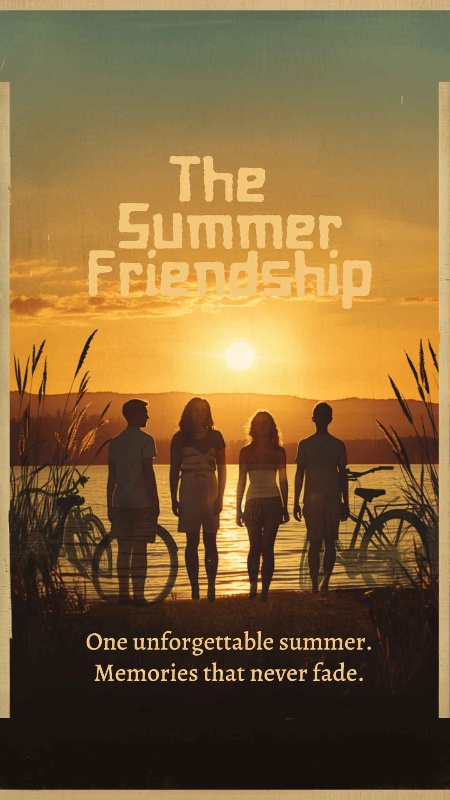
The summer we turned eighteen began with a lie.
It wasn't a serious lie.
Nobody was trying to hurt anyone.
Nobody was planning to run away, break a heart, or change the course of their life.
It was the kind of lie people tell when they are young and certain they have plenty of time.
“We're going to have the best summer of our lives,” Noah said.
He said it while standing on the roof of an old blue car, holding a bottle of lemonade like it was champagne.
Mia laughed.
“You say that every summer.”
“This time I mean it.”
“You said it last summer.”
“Last summer was practice.”
Ethan shook his head.
“You're an idiot.”
Noah raised the bottle toward him.
“And you're invited.”
Sophie smiled.
The four of them were standing outside the little beach house Noah's uncle owned on the edge of Greywater Bay.
The house wasn't really a house.
It was more like a collection of rooms that had somehow survived several decades without collapsing.
The paint was peeling.
The windows stuck.
The porch leaned slightly to the left.
The shower made a noise like an angry animal.
But it was theirs for the summer.
Noah's uncle had given them permission to stay there while he worked overseas.
Four friends.
One house.
Three months.
No parents.
No school.
No exams.
No plans beyond the ones they made every morning.
At eighteen, that sounded like freedom.
They didn't know yet that freedom was sometimes just another word for not knowing what came next.
Mia had known Noah since they were eleven.
She had met Ethan at thirteen.
Sophie joined their little group at fifteen.
They weren't the kind of friends who did everything together.
That would have been impossible.
Noah was impulsive.
Ethan was cautious.
Sophie noticed everything.
Mia overthought everything.
They argued constantly.
They had different tastes in music.
Different ideas about money.
Different opinions about what made a good movie.
Different dreams.
Noah wanted to travel.
Ethan wanted to study engineering.
Sophie wanted to become a photographer.
Mia had no idea what she wanted.
That embarrassed her.
Everyone else seemed to have an answer.
Whenever adults asked, “What are you going to do after school?” Ethan talked about universities.
Sophie talked about photography programs.
Noah talked about traveling through Europe with a backpack.
Mia smiled and said, “I'm still figuring it out.”
She hated saying it.
She hated the way people nodded afterward.
As though “figuring it out” was something you did only when you were behind.
But that summer, nobody asked.
That was one of the reasons she loved it.
The first week was perfect.
They woke late.
They ate cereal from bowls too large for the amount of milk they had.
They swam until their skin wrinkled.
They played cards on the porch.
They walked to the beach after midnight.
They stole tomatoes from Noah's uncle's garden.
They made pancakes at two in the morning and burned half of them.
They discovered that Ethan couldn't sing.
“You're actually terrible,” Sophie told him.
“I know.”
“Then why are you still singing?”
“Because I'm committed.”
Noah nearly fell off his chair laughing.
Mia took a photograph.
The picture came out blurry.
It showed four teenagers around a kitchen table, laughing so hard none of them looked normal.
Mia loved it.
She didn't know why.
At the time, it was just a picture.
Years later, it would become one of the most important photographs she owned.
By July, they had created routines.
Noah always woke first.
He would go for a run and come back complaining dramatically about how much running hurt.
Ethan would make coffee.
Sophie would sit on the porch and edit photographs.
Mia would sleep until someone threw a pillow at her.
They went to the same little diner every Tuesday.
They bought ice cream from the same van every Friday.
They watched the sunset from the pier almost every evening.
The summer became a collection of small traditions.
Nobody planned them.
They simply happened.
One afternoon, they decided to drive to a town forty miles away.
Noah was driving.
Ethan was navigating.
Sophie was taking photographs.
Mia was responsible for snacks.
Three hours later, they were lost.
“You said you knew the road,” Ethan said.
“I know roads.”
“You don't know this road.”
“I know roads generally.”
“That's not how navigation works.”
Noah turned the music louder.
Mia laughed.
Eventually they found themselves on a dirt road surrounded by fields.
They stopped beside an abandoned barn.
The sun was setting.
For a few minutes, nobody spoke.
Sophie lifted her camera.
“Don't move.”
Noah groaned.
“I look terrible.”
“You always look terrible.”
“Thank you.”
She took the photograph.
Then another.
Mia looked at the three of them.
She suddenly felt something she couldn't explain.
A strange sadness.
She didn't know where it came from.
“What's wrong?” Ethan asked.
“Nothing.”
“You're quiet.”
“I'm thinking.”
“Dangerous.”
She smiled.
“I just…”
She stopped.
“What?”
Mia looked at the sky.
“I wish we could stay like this.”
Nobody laughed.
Because they understood.
The summer was moving.
They could feel it.
August was coming.
And after August came September.
And after September came everything they had spent years imagining.
University.
Jobs.
Different cities.
Different people.
Different lives.
Noah kicked a stone across the dirt.
“We could.”
Mia looked at him.
“How?”
“We could just not leave.”
Ethan laughed.
“Our parents might notice.”
“Not if we hide.”
Sophie smiled.
“That's your plan?”
“Yes.”
“You've thought this through.”
“Obviously.”
Mia laughed.
For a moment, the sadness disappeared.
But it came back later.
The first real fight happened over nothing.
Or at least, that's what Mia told herself.
Noah had invited a group of people from the beach to a party at the house.
Ethan hated the idea.
“We'll get the place destroyed.”
“No, we won't.”
“You don't know that.”
“I know people.”
“You met them yesterday.”
“Exactly. We're practically family.”
Sophie looked up from her camera.
“I don't care.”
Mia did.
She didn't know why.
Maybe she simply didn't want strangers there.
Maybe she was afraid the house would stop feeling like theirs.
Maybe she was already beginning to understand that the summer belonged to them only as long as they remained together.
“Can't we just not?” she asked.
Noah looked at her.
“It's one party.”
“I know.”
“So?”
Mia shrugged.
“Nothing.”
Noah sighed.
“Why do you always do that?”
“Do what?”
“Say you're fine when you're obviously not.”
Mia felt herself becoming defensive.
“I'm allowed to not want a party.”
“And I'm allowed to want one.”
Ethan stood.
“Can we not do this?”
Noah laughed.
“Of course. Ethan doesn't like conflict.”
“I don't like stupid conflict.”
“Well, congratulations.”
The argument lasted fifteen minutes.
Then they went to bed angry.
By morning, nobody remembered why they had been angry.
That became the first lesson of the summer.
Not every fight was important.
But sometimes the things people fought about weren't really the things they were fighting about.
Mia and Noah became closer that summer.
Not romantically.
Not exactly.
They had always been close.
But something changed.
Noah began telling her things he didn't tell the others.
He was afraid of leaving home.
He joked about traveling, but the truth was that he was terrified.
“What if I go and hate it?” he asked one night.
“Then come home.”
“What if coming home feels like failure?”
Mia looked at him.
“Why would it?”
“Because everyone expects me to become someone.”
“You don't have to become someone.”
He laughed.
“You're the only person who says things like that.”
“Maybe everyone else is wrong.”
He looked at her.
“Maybe.”
Later that night, Mia admitted something too.
“I don't know what I want.”
Noah smiled.
“Good.”
“Good?”
“Means we can figure it out together.”
She laughed.
“You're terrible at advice.”
“I'm excellent at advice.”
“You're the person who tried to fix a toaster with a spoon.”
“It worked.”
“It exploded.”
“Eventually.”
They laughed.
And that was the thing about friendship.
Sometimes the most important conversations happened between jokes.
Sophie was changing too.
She had always been the quiet one.
But that summer she became brave.
She photographed strangers.
She walked into galleries alone.
She submitted her work to a local competition without telling anyone.
She won.
When she showed them the email, Noah screamed.
Ethan hugged her.
Mia cried.
Sophie laughed.
“I haven't even decided if I'm going.”
“You have to go,” Mia said.
“I know.”
“Then why do you look scared?”
“Because it's real.”
That sentence stayed with Mia.
Because it was true for all of them.
The future had stopped being an idea.
It was becoming real.
August arrived.
The mornings became cooler.
The evenings grew shorter.
Nobody mentioned it.
They didn't need to.
One evening, they sat on the beach around a small fire.
Noah had brought marshmallows.
Ethan had brought a guitar.
Sophie had brought her camera.
Mia had brought nothing.
She had stopped bringing things.
She was afraid everything would eventually become something she had to leave behind.
Noah looked around the fire.
“We should make a pact.”
Ethan groaned.
“Absolutely not.”
“We should.”
“No.”
“Why?”
“Because every friendship pact I've ever heard ends badly.”
Sophie laughed.
“He's right.”
Noah ignored them.
“Everyone says where they'll be in ten years.”
Mia smiled.
“That sounds depressing.”
“Come on.”
Ethan sighed.
“Fine.”
Noah went first.
“Ten years from now, I'll have traveled everywhere.”
“You haven't even left the country,” Ethan said.
“Details.”
Sophie smiled.
“I'll have a photography studio.”
Ethan thought for a moment.
“I'll be an engineer.”
They looked at Mia.
She stared at the fire.
“I don't know.”
Noah smiled.
“That's okay.”
Mia looked at him.
“Really?”
“Really.”
He threw another marshmallow into the fire.
“Maybe you'll surprise all of us.”
She smiled.
“Maybe.”
They made one promise.
No matter where they were in ten years, they would come back to Greywater Bay.
Same beach.
Same week in August.
Same four friends.
Nobody said they might not be able to.
Nobody said people changed.
Nobody said life could become complicated.
They were eighteen.
They believed promises were stronger than time.
The worst night came three days later.
They had gone to a party in town.
Mia didn't want to go.
She went anyway.
Noah drank too much.
Ethan tried to get him home.
Noah refused.
They argued.
Ethan left.
Sophie went after him.
Mia stayed with Noah.
On the walk home, Noah said something he shouldn't have.
“You're going to leave too.”
Mia stopped.
“What?”
“You all are.”
“Why are you saying that?”
“Because everybody leaves.”
She realized he was drunk.
“You're not making sense.”
“I am.”
“No.”
“You're going to find someone better.”
Mia stared at him.
“What are you talking about?”
He shook his head.
“Nothing.”
They walked the rest of the way in silence.
The next morning, Noah apologized.
Mia accepted.
But something had shifted.
For the first time, she realized that even Noah was afraid of losing them.
They were all afraid.
They simply hid it differently.
The final week arrived too quickly.
The house became full of boxes.
Empty shelves.
Folded blankets.
Packed bags.
The magic was disappearing.
On the last night, they sat on the porch.
Nobody wanted to go inside.
Nobody wanted to say goodbye.
Sophie brought out the photograph she had taken on their first night.
The four of them crowded around it.
“We look ridiculous,” Ethan said.
“We were ridiculous,” Noah replied.
Mia smiled.
“We're still ridiculous.”
Noah looked at her.
“Probably.”
They sat quietly.
Then Ethan said,
“I don't think we'll stay the same.”
Nobody argued.
Sophie looked down.
“No.”
“I don't think that's bad,” he continued.
Noah nodded.
“It just means we'll have to try.”
Mia looked at him.
“Try what?”
“To stay friends.”
The words hurt.
Because until then, they had assumed friendship happened automatically.
Now they were realizing it required effort.
Noah held out his hand.
“One year from now?”
Ethan put his hand on top.
Sophie followed.
Mia placed hers over theirs.
“One year.”
They didn't keep the promise.
Not exactly.
The first year, they spoke often.
Then less.
University became busy.
Sophie moved away.
Ethan started an internship.
Noah traveled.
Mia worked two jobs before finally deciding to study something she actually liked.
They missed calls.
Forgot birthdays.
Sent messages weeks late.
One Christmas, they didn't speak at all.
The friendship didn't break.
It stretched.
Sometimes painfully.
Sometimes almost to the point of breaking.
But it remained.
Years passed.
They became different people.
Sophie married.
Ethan moved abroad.
Noah traveled through twenty countries.
Mia became a teacher.
They didn't know everything about each other's lives anymore.
That hurt.
But whenever one of them needed something important, the others appeared.
When Sophie's father died, they all came.
When Ethan lost his job, Noah flew across the country.
When Noah returned home after a failed business venture, Mia picked him up from the airport.
Nobody asked whether they were still best friends.
They simply behaved like it.
Ten years after that summer, they returned to Greywater Bay.
The beach house was gone.
The owner had sold it.
The porch had been torn down.
The windows were different.
But the beach remained.
The four of them stood in the sand.
Older now.
Mia was thirty.
Sophie was married.
Ethan had two children.
Noah had lived in six countries.
They looked at one another.
For a moment, nobody knew what to say.
Then Noah smiled.
“We made it.”
Ethan laughed.
“Barely.”
Sophie lifted her camera.
“Don't move.”
Mia laughed.
“You always say that.”
Sophie looked through the viewfinder.
“Because you always move.”
The camera clicked.
One photograph.
Four friends.
Older.
Changed.
Still there.
Later, they sat around a fire.
They talked until midnight.
They talked about everything they had missed.
The people they had loved.
The mistakes they had made.
The dreams that had changed.
The dreams they had abandoned.
The dreams they had accidentally found.
Mia looked around.
The summer was gone.
But the friendship wasn't.
Not the friendship they had imagined at eighteen.
Something better.
Something real.
At eighteen, they thought lifelong friendship meant never changing.
At thirty, they finally understood.
It meant changing and still finding your way back.
Years later, Mia would still remember that summer more clearly than almost anything else.
She would forget the exact dates.
She would forget what they argued about.
She would forget half the names of the people they met.
But she would remember the smell of salt in the evenings.
The sound of Noah laughing.
Sophie holding her camera.
Ethan playing the guitar badly.
The blue car.
The broken shower.
The burned pancakes.
The midnight swims.
The road trip where they got lost.
The fire on the beach.
The promise they made.
And the strange sadness she had felt on that dirt road when she realized summer couldn't last forever.
She had been right.
It couldn't.
That was the point.
Summer wasn't supposed to last forever.
Neither was childhood.
Neither was eighteen.
Neither was the version of themselves they had been when they stood outside that little beach house and promised nothing would ever change.
Everything changed.
They changed.
Their lives changed.
Their friendships changed.
But some things survived because they were allowed to change.
Years later, when Mia found the old photograph from that first night, she kept it in a wooden frame on her desk.
Sometimes her students asked about it.
“Who are they?”
Mia always smiled.
“My oldest friends.”
“Do you still talk to them?”
She would look at the photograph.
Four teenagers.
Four ridiculous smiles.
Four people who had believed the future belonged to them.
“Yes,” she'd say.
“Are you still best friends?”
Mia would think about the question.
Then she'd smile.
“We're something better.”
“What?”
“People who know where we came from.”
And that was what the summer had really given them.
Not a perfect friendship.
Not a promise that nobody would ever leave.
Not a magical summer frozen in time.
It had given them something much more valuable.
A beginning.
A memory strong enough to survive distance.
A friendship that could bend without breaking.
And proof that sometimes the people you meet when you're young become the people who quietly carry pieces of your younger self for the rest of your life.
The summer ended.
Of course it did.
But it never really disappeared.
It lived in photographs.
In old jokes.
In phone calls made after midnight.
In reunions that began awkwardly and ended with everyone laughing.
In the places they returned to.
In the people they became.
And whenever Mia thought about that summer, she remembered something Noah had said while standing on the roof of that old blue car.
We're going to have the best summer of our lives.
He had been wrong.
It wasn't the best summer of their lives.
It was simply the summer that taught them how much a life could change.
And how, if they were lucky, some people could change with it.