
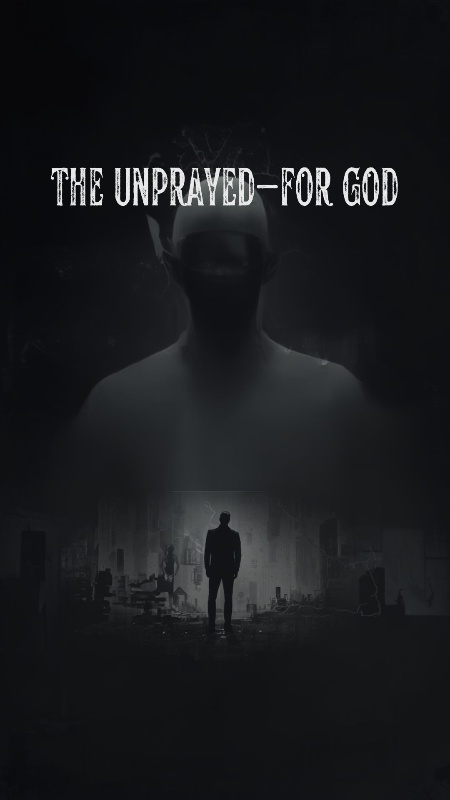
The chalk lines were wrong.
Elias knew it before the first word even left his mouth. The angle was off—maybe three degrees, maybe four—but the book didn't have a diagram, just a bunch of peeling ink and that smell. That horrible, sweet, rotting smell that clung to the pages like perfume. He shouldn't have bought the book. He shouldn't have humored Marcus. Marcus with his shaking hands and his wide, terrified eyes, who swore up and down that the world was thinning. That the veil was a lie.
"I need a skeptic," Marcus had whispered into the phone at 3:14 AM. "It can't sense a believer. It feeds on faith, Elias. You don't have any. You're empty."
Elias had laughed at that. Laughed and told him he was being a superstitious idiot. But he'd driven to the house anyway. Why? Because it was a puzzle? Because he wanted to prove that all the incense and the chanting and the black candles were just theater?
Yes. That's what he told himself.
The basement smelled like wet cement and rust. It was the kind of cold that gets into your bones and makes your teeth chatter. Elias looked down at his hands, at the chalk dust coating his knuckles, and felt ridiculous. He was wearing a three-piece suit in a flooded basement at midnight. He looked like a corporate lawyer about to close a deal with a ghost.
He read the first line.
The words were guttural. Animal. They weren't a language, they were a sound—like a dying engine, like metal grinding against bone. His throat hurt as he forced them out.
K'thal. Veth. Na'ir.
He paused. The basement was silent. The furnace hummed somewhere in the corner, rattling in its metal casing. This is stupid. He lit the next candle. The flame flickered blue for a second, then settled into orange. He kept going.
Veth. K'thal. Na'ir.
He got to the part where the syllables became consonants—just a sharp, spitting mess of clicks and stops. His mouth was dry. His tie felt too tight. He reached up and loosened the knot, feeling the sweat on his neck.
Elias stopped.
He looked up. The ceiling was still there. Concrete. A single hanging bulb.
But the silence wasn't.
It was heavy. Thick. Like he'd been shoved into a vat of oil. The hum of the furnace was gone. The drip of water from the corroded pipes was gone. Even his own breathing sounded far away, muffled, like he was underwater.
Elias stood up. His legs felt like lead.
Okay. Enough. He grabbed his phone to call Marcus, to tell him the joke was over, but his thumb hovered over the screen. The signal was dead. The clock read 2:17 AM.
He looked down at the chalk circle.
It was gone.
Not smudged. Not washed away. Gone. The concrete was bare. But beneath his feet, the floor was moving. Not shaking—*moving.* It was peeling back. Opening up. Elias looked down through the floor, and he fell.
No. Wait. He didn't fall. The basement disappeared. The house disappeared. The entire world disappeared, and he was standing. Just standing. On nothing.
Elias lifted his head slowly, the way you do when you're afraid of what you'll see.
It was beautiful. God, it was beautiful. An impossible cathedral of stairs. Spiral staircases twisting up and up and up, into a void that was blue—a cold, deep, starless blue. Balconies jutted out from nowhere. Railings of rusted iron curled around doorways that led to other doorways. Arches. Bridges. A labyrinth of pure, architectural madness.
It was the most terrifying thing he'd ever seen, and he couldn't look away. He was standing at the bottom. No—he was standing in the middle. Everywhere. The stairs surrounded him, rising like the ribs of some dead, colossal creature.
And from the top, from the deep, cold silence, something looked at him.
There were no eyes. No face. Just a pressure—like a heavy hand pressing down on the top of his skull. Elias felt his chest seize. His skin crawled. The hairs on his arms stood up so fast he thought they might snap off.
You called, it said.
Not in words. Not in his head. It was just there—the knowledge, the realization. The truth. He hadn't performed a ritual. He had opened a mouth. A great, starved, endless mouth. And it was tasting him.
I didn't mean to, Elias thought. I didn't—Marcus. Marcus said—
The god moved. Not physically. There was nothing physical here. But the stairs shifted. The metal railings twisted, screeching, groaning, rust flaking off like dead skin. The blue light brightened, then dimmed, pulsing like a heartbeat.
It was coming down.
Elias wanted to run. God, he wanted to run. But his legs wouldn't work. He was shaking, his whole body vibrating with a fear so primal it made him want to vomit. The cold in the air turned biting, then freezing. The breath frosted in front of his face. His knees buckled. He didn't fall, though. He just hung there, suspended, like a puppet with cut strings.
It was hungry.
Elias felt the hunger. It wasn't a thought. It was a physical sensation in his own gut. A gnawing, agonizing emptiness. The god had been alone. Not just alone—*erased.* It had been forgotten by the other gods, shoved into the gap between their existence. It had no prayers. No sacrifices. No believers. It fed on faith, Marcus had said. Faith was its food. And Elias didn't have any.
But wait.
Elias had attention. He had presence. He was here. He was looking. He was thinking about it.
No, Elias thought. No, no, no. I don't believe in you. You don't exist.
The pressure increased. The god descended. Elias saw its shape now. Not a monster. Not a beast. It was a structure—a twisted, impossible architecture of flesh and iron and stone. Staircases made of bone. Doorways that were mouths. It was the builder of the ruin. The architect of everything broken.
You are here, the god said. You are looking. You are... feeding me.
"I'm not!" Elias screamed. His voice cracked. He sounded pathetic. "I'm not praying! I'm not worshipping you!"
You don't have to worship. You just have to acknowledge.
The god stopped right in front of him. Three feet away. Elias could see the individual steps of the staircase now. Each one was a human face. A frozen, screaming, hollowed-out face.
His skin prickled. His stomach twisted into knots. He was going to throw up. He was going to shit his pants. He was going to die in a place that didn't exist, in front of a god that shouldn't exist, wearing a goddamn Brooks Brothers suit.
Elias laughed.
It was a horrible, wet, high-pitched sound. He laughed because it was absurd. Because he was an atheist. Because he'd spent his entire life mocking people who believed in this stuff. And now he was standing in the belly of a nightmare, staring at the face of a deity that was made of human remains.
He hated himself. He loved his own logic. He didn't know anymore.
Feed me, the god whispered.
The god opened its mouth. It didn't have a mouth. But it opened anyway. A dark gap in the architecture, hollow and black. Elias felt his soul lifting. Physically lifting. Being pulled. A sickening sensation, like his chest was being unzipped from the inside out.
He thought of Marcus. Marcus's terrified eyes. Marcus's shaking hands. Marcus who believed. Marcus who was probably safe, right now, in his own bed, believing in something else. Believing in a God that had light. A God that had warmth.
Elias had called the wrong one.
He was the skeptic. He was the empty one. And he was full of nothing. Nothing for the god to eat. Nothing for the god to consume.
Empty, he thought. I'm empty.
The god recoiled.
The stairs shook. The iron railings snapped, whipping through the air, slamming into the concrete walls of the floating void. The god screamed. It was a silent scream, but Elias felt it—felt it tearing through his brain, his eyeballs, his teeth.
He had no faith. He had no belief. He was a hollow vessel, and the god couldn't feed on him.
Then I will break you, the god said. I will make you believe.
The doorways opened. Elias saw them. Door after door, opening along the spiraling staircases. Inside, he saw faces. His mother. His father. Marcus. His ex-wife. They stared at him, mouths moving, speaking words he couldn't hear.
Look at them, the god said. Look at what I have made.
Elias looked. And he felt it. The terror. The grief. The loneliness. It flooded into him, crashing over him like a cold wave. He had ignored his mother's calls. He had left his father alone in that retirement home. He had walked out on his wife, told her he didn't believe in love, didn't believe in anything.
He had denied them all.
And now, in his denial, he had given the god a gift.
It was the god's turn to laugh. Elias felt it. A vibration in the floor. A purring, hungry, satisfied sound.
You are full of holes, the god said. I will fill them.
Elias fell to his knees. The stairs were cold. They were made of bone. He could feel the ridges of the skulls digging into his expensive trousers. He was crying now. Big, ugly, snotty sobs. He wasn't an atheist anymore. He was a man. A broken, terrified, insignificant man.
Please, he thought. Please. I'll pray. I'll worship you. I'll—
Liar, the god said.
And it was right. He was lying. He would say anything to survive, but he still didn't believe. He couldn't. He had spent too long building walls out of logic, and now those walls were the only thing keeping him alive.
The god was frustrated. The architecture around Elias screamed. The staircases twisted, snapping, collapsing into one another. The blue light bled out, turning to a sickly shade of grey.
You cannot starve me, the god snarled. I am inevitable.
"I don't believe that," Elias whispered.
The god froze.
Elias looked up. His face was wet. His tie was crooked. He looked like a mess. But he smiled. A weak, pathetic, trembling smile.
"I don't believe you're inevitable," Elias said. "You're just a parasite. A parasite that got locked out. You can't force belief, you goddamn cockroach. It doesn't work that way."
The god screamed again. It was furious. Furious. The basement came back.
Elias blinked. He was on the concrete floor. The chalk circle was still there. The candles were still burning. The furnace was humming. The phone in his hand read 2:19 AM.
Two minutes. Only two minutes had passed.
He was on his knees. He was shaking. He was crying. But he was alive.
Elias scrambled backward, slamming his back against the basement wall. The chalk circle sat there, inert, dead. The book was open on the floor. The pages fluttered, though there was no wind.
No, he thought. No. I didn't do that. I didn't—
He picked up the book.
It was heavier than it had been before. Much heavier. He flipped to the last page. The text had changed. It wasn't ancient scribbles anymore. It was English. It was his handwriting.
The ritual is a trap. The god feeds on attention, not faith. It needs you to acknowledge it. It needs you to fear it. Do not fear it. Do not look at it. It cannot exist without a witness.
It will try again.
Elias slammed the book shut. His hands were shaking so hard he could barely hold it. He looked around the basement. He listened. The silence was heavy again. The silence was waiting.
He didn't believe in it. He refused to believe in it.
But he couldn't stop it from believing in him.
Elias got to his feet. He walked up the stairs, out of the house, into the cold night air. His car was still there. He got in, started the engine, and drove. He drove for hours. He didn't know where he was going.
When the sun came up, he was parked outside an old church. A Methodist church, or something like that. A small, white building with a steeple and a cross.
Elias sat in his car and looked at it. He didn't go in. He didn't pray. He couldn't.
But he sat there, and he looked, and he knew the god was watching him.
He spent the next week in a motel. He didn't sleep. Every time he closed his eyes, he saw the stairs. The bone faces. The endless, hungry void. He stopped eating. He stopped showering. He just sat in the chair by the window, staring out at the sky, waiting for the sky to crack open.
Marcus called him fifteen times. Elias didn't answer.
Marcus came to his door. Elias didn't open it.
Marcus finally left a voicemail.
"Elias? Hey, man. Listen, I know the ritual was a mistake. I'm sorry. I shouldn't have made you do it. Whatever happened, it's my fault. But I just—I felt something change. Like something is watching me. Is it—is it you? Are you... okay?"
Elias listened to the voicemail. He smiled. A dead, empty smile.
Poor Marcus, he thought. Marcus is a believer now. Marcus has faith.
He didn't call back.
Because he knew. He knew that the god had found a new vessel. A new pair of eyes. A new source of fear. Elias had been empty. But Marcus was full of guilt, and guilt was food. Guilt was delicious.
Elias pulled the curtains shut. He lay down on the bed. For the first time in a week, he closed his eyes.
He saw the stairs. He saw the bone faces. He saw the god, waiting.
But it wasn't looking at him anymore.
It was looking through him.
It was looking at Marcus.
And Elias felt the cool, quiet relief of a man who had finally, finally passed the torch to someone else. He wasn't saved. He wasn't free. He was just another step in the architecture. Another face in the stairs.
I don't believe, Elias thought, as the darkness closed in.
But he does.